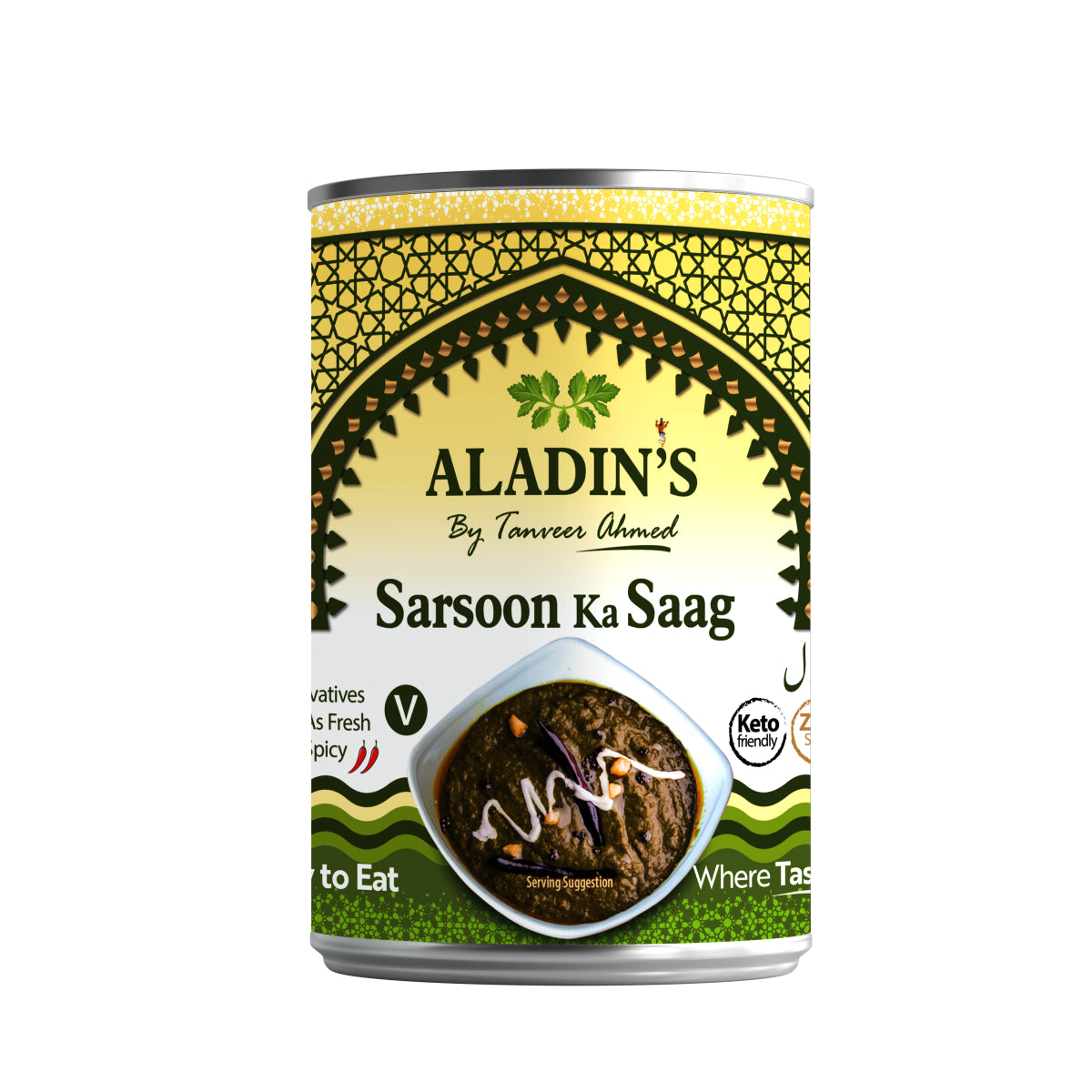
Sarson Ka Saag: The Rich History and Culinary Heritage of South Asia
Experience the Timeless Flavors—Now Captured in a Can by Aladin Foods
Savouring Tradition
Ah, Sarson Ka Saag—the golden-green crown jewel of Punjabi cuisine, a dish that sings of the earth, the seasons, and the soul of the land. This hearty, mustard-green stew is more than just food; it’s a cultural anthem, a winter ritual, and a testament to the ingenuity of Punjabi farmers who turned humble greens into a culinary masterpiece. But mustard greens have a story that stretches far beyond the fields of Punjab, weaving through culinary traditions across the world. From the tangy mustards of Europe to the braised greens of the American South and the fermented varieties of East Asia, mustard in its many forms has played a vital role in shaping global cuisines. Let’s explore the roots of this iconic dish and its journey as a beloved ingredient connecting cultures across continents.
A Punjabi Winter Tradition
Sarson Ka Saag is the ultimate comfort food of Punjab, a region known for its fertile soil and agricultural abundance. When winter arrives, the fields of Punjab come alive with the vibrant green of mustard leaves (sarson), which thrive in the cool weather. Alongside other leafy greens like spinach (palak) and bathua (white goosefoot), these leaves are chopped, slow-cooked, and lovingly mashed into a thick, velvety saag. Tempered with garlic, ginger, green chilies, and a dollop of ghee or makhan (white butter), it’s served with a slab of makki di roti (cornmeal flatbread), creating a harmony of flavours that is rustic, nourishing, and deeply satisfying.
The dish is a celebration of the land and its people. It is also a dish of togetherness, often prepared in large quantities during local festivals like Lohri and Makar Sankranti, where families gather around the hearth to share stories and warmth.
The Mustard Connection: East Meets West A Global Ingredient
Now, let’s talk mustard. Mustard greens, the heart of Sarson Ka Saag, are part of the Brassica family, which includes cabbage, kale, and broccoli. Mustard itself has a fascinating global history. It is believed to have originated in the Himalayan foothills, where it was first cultivated thousands of years ago. From there, it spread to the Mediterranean, Europe, and beyond, becoming a staple in cuisines worldwide.
In the West, mustard is best known for its seeds, which are ground into the tangy condiment we slather on hot dogs and sandwiches. But mustard greens have also played a role in Western cooking, particularly in the American South, where they are braised with ham hocks or bacon, and in Italy, where they are used in soups and stews. While the preparation and flavours differ, the love for mustard greens is a thread that connects these culinary traditions.
A Dish That Bridges Cultures
Sarson Ka Saag is more than just a dish; it is a bridge between cultures. It reminds us that food is a universal language, one that transcends borders and brings people together. Whether it is served in a Punjabi village home, a New York restaurant, or a Parisian bistro, it carries with it the spirit of the land, the hands that prepared it, and the hearts that savour it.
Sarson Ka Saag is not just a meal you are eating, you are in fact partaking in a tradition that spans centuries, continents, and cultures—a tradition that celebrates the earth, the harvest, and the joy of sharing food with loved ones. And who knows? Maybe somewhere in the world, a chef is adding a French twist to this Punjabi classic, proving once again that great food knows no boundaries.
Historical Trade Links: Mustard’s Journey from Punjab to the West
The Silk Road Connection
Mustard seeds were prized in ancient trade networks. Traders carried them to Persia, where they were used in pickles and stews, and to the Roman Empire, where they became a staple in sauces. The Romans introduced mustard to Gaul (modern-day France), where it became a cornerstone of French cuisine. The famous Dijon mustard owes its existence to these early trade routes.
Colonial Trade and the Spice Route
During the colonial era, European powers like the British and Dutch established trade routes to India, bringing back not just spices but also agricultural knowledge. Mustard greens, though less celebrated than spices like turmeric and cardamom, were part of this exchange.
Mustard Across Borders: A Shared Culinary Heritage
The global appeal of mustard extends beyond the subcontinent, connecting different parts of the world through its diverse culinary uses. In Europe, mustard seeds have long been transformed into pastes and condiments that accompany meats, cheeses, and sandwiches. In the American South, mustard greens became a staple of soul food. Southern-style mustard greens, often cooked with ham hocks or bacon, share a surprising kinship with Sarson Ka Saag—both are dishes born of necessity, resilience, and a deep connection to the land. In East Asia, particularly in China and Korea, mustard greens are fermented, pickled, or stir-fried, adding depth to countless dishes. This universal love for mustard, in all its forms, binds diverse culinary traditions, underscoring how a single ingredient can weave together global communities through food.
Now Captured in a Can by Aladin Foods
Today, the rich heritage of Sarson Ka Saag has been preserved in a ready-to-eat form, making it accessible to a global audience. With Aladin Foods, this timeless dish is now just a can away, bringing the warmth of Punjab to tables around the world. No matter where you are, you can savour the legacy of mustard greens, slow-cooked to perfection—ready to be enjoyed with the same love and tradition that has made it a cherished part of South Asian cuisine for centuries.
Sarson Ka Saag: a dish that’s as global as it is local, as modern as it is timeless.
Sarson Ka Saag: A Global Love for Mustard
Global Appeal: From Punjab to the World
Sarson Ka Saag’s global appeal lies in its simplicity and versatility. As the world embraces plant-based eating, this humble dish has found new fans far beyond Punjab. In Indian restaurants abroad, it’s a vegetarian showstopper, often paired with makki di roti or even naan for the uninitiated. But its influence doesn’t stop there.
Regional Adaptations in the Diaspora
North America: The Health-Centric Makeover
In the U.S. and Canada, Sarson Ka Saag has undergone a health-conscious transformation. Often lighter, with less ghee and makhan (butter), it caters to calorie-conscious diners. Mustard greens are sometimes blended with kale or spinach to balance the bitterness, making it more palatable to Western tastes. Trendy urban eateries serve it as a saag bowl, topped with quinoa, roasted vegetables, or even a poached egg for a protein boost. Fusion versions include saag tacos or saag-stuffed flatbreads.
United Kingdom: The Comfort Food Staple
In the UK, where Punjabi cuisine has become a cornerstone of British food culture, Sarson Ka Saag is a beloved comfort food. British Punjabis often prepare it with a mix of mustard greens and spinach, as fresh mustard greens can be harder to find. It is commonly served with makki di roti or, in a nod to British tastes, with naan or even wholemeal bread.
Australia: The Farm-to-Table Twist
In Australia, where farm-to-table dining is a growing trend, Sarson Ka Saag has found a new audience among foodies and locavores. Australian Punjabis often grow their own mustard greens in home gardens, ensuring the freshest possible ingredients. The dish is sometimes paired with grilled meats or seafood, reflecting Australia’s love for barbecue.
Middle East & Southeast Asia: The Fusion Evolution
In the Gulf countries, Sarson Ka Saag has taken on a spicier profile with the addition of Middle Eastern spices like cumin, coriander, and cardamom. In Malaysia and Singapore, coconut milk is sometimes added, giving it a creamy, tropical twist.
Mustard Across Borders: A Shared Culinary Heritage
The global appeal of mustard extends far beyond the subcontinent, connecting different parts of the world through its diverse culinary uses.
Europe: Mustard seeds have long been transformed into pastes and condiments that accompany meats, cheeses, and sandwiches. The famous Dijon mustard of France owes its existence to ancient trade routes that carried mustard seeds from South Asia to Europe.
The American South: Mustard greens became a staple of soul food, often cooked with ham hocks or bacon. Southern-style mustard greens share a surprising kinship with Sarson Ka Saag—both are dishes born of necessity, resilience, and a deep connection to the land.
East Asia: In China and Korea, mustard greens are fermented, pickled, or stir-fried, adding depth to countless dishes. Their pungent, slightly bitter flavor is celebrated in everything from kimchi to stir-fries.
This universal love for mustard, in all its forms, binds diverse culinary traditions, underscoring how a single ingredient can weave together global communities through food.