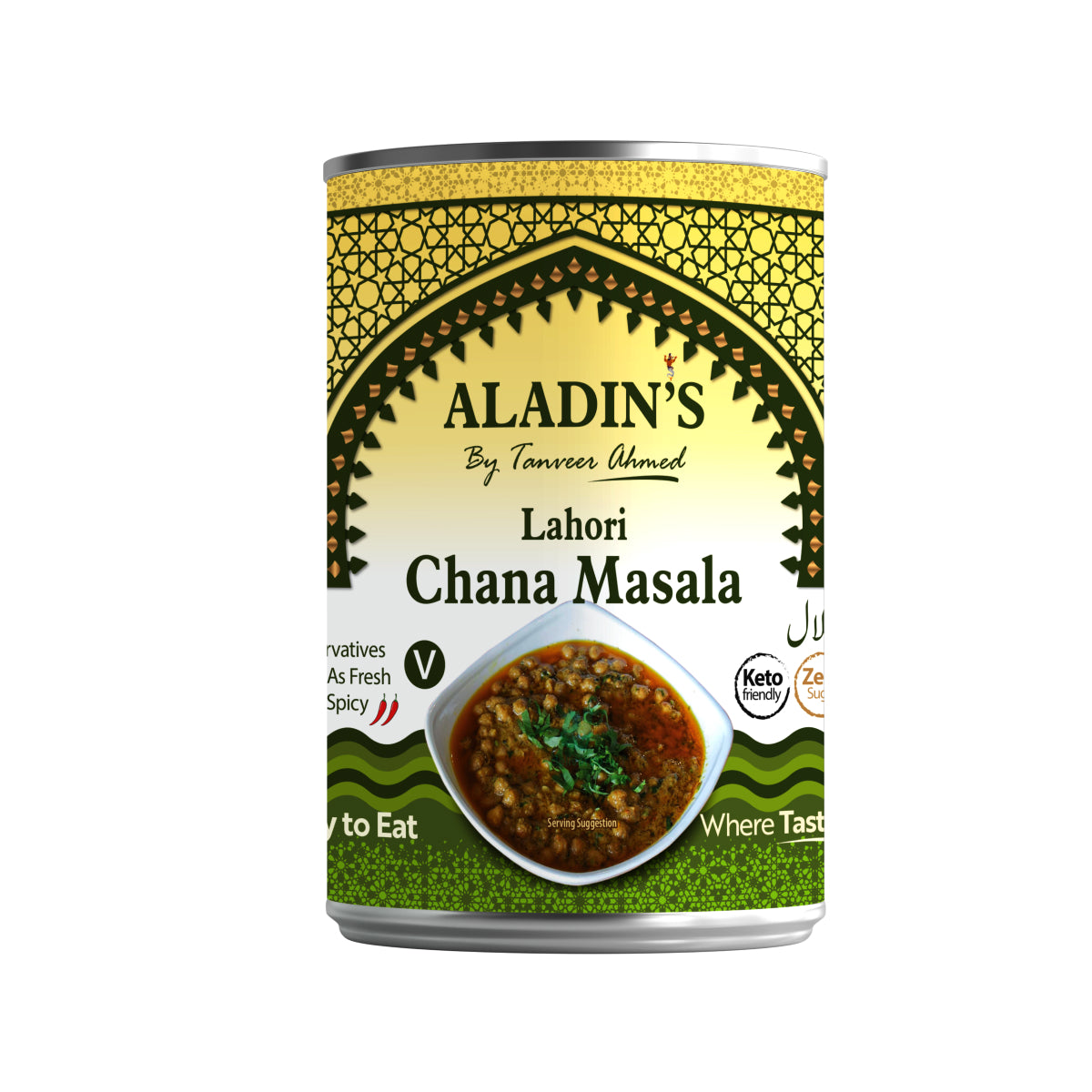
Lahori Chana Masala
Lahori Chana Masala
Lahori Chana Masala – Chickpeas cooked in thick gravy with curd.
Produce in United Kingdom and using British meat.
- Ready to Eat
- No Preservatives
- No Colouring
- As Good As Fresh – Medium Spicy
Couldn't load pickup availability
Ingredients
Ingredients
Chickpeas (36%), Tomatoes, Onions, Low Fat Yogurt (milk), Mixed Spices (red Chilli, Salt, Dried Coriander, Turmeric, Cumin Powder, Dry Garlic, Dry Ginger, Black Pepper, Clove, Cinnamon, Cardamom, Ground Nigella Indka, Fenugreek Powder), Garlic, Ginger And Rapeseed Oil.
Nutritional Information
| Typical Values per | 100g | 200g | |
|---|---|---|---|
| Energy | KJ | 860 | 1080 |
| kcal | 210 | 260 | |
| Fat | g | 8.3 | 11.2 |
| of which Saturates | g | 1.0 | 1.0 |
| Carbohydrates | g | 13 | 22 |
| of which Sugars | g | 0 | 7.2 |
| Protein | g | 17 | 10.6 |
| Salt | g | 0.59 | 0.26 |
Allergy Advice
Allergy Advice
Milk
Cooking Guidelines
Cooking Guidelines
The following are guidelines only. Some appliances may vary.
HOB: Empty contents into saucepan. Heat gently, stirring occasionally until hot throughout. Do not allow to boil. Do not re-neau
MICROWAVE: (850W): Empty contents into a non-metallic ow, cover and vent. near Tor s to 4 minutes. surtine naiway. Check the food is piping hot, stir well and serve. Do not re-heat. Select appropriate times for your microwave. Heating times must be adjusted to suit different power.
Caution: Take care when removing cover as hot steam will release
Storage Instructions
Store in cool dry place. Once opened, store in a non-metallic container in refrigerator. Use within 2 days.
Additional Information
Packaging & Postage £5.00 for each order.
About Chana Masala
Chana masala, the beloved chickpea curry that has warmed countless hearts and filled countless plates across South Asia, carries with it a history as rich and varied as its flavors. Though it may not boast the royal lineage of a Mughal feast or the ancient roots of Haleem, its story is one of resourcefulness, adaptation, and the quiet brilliance of everyday cooking. It is a dish that speaks to the soul of the subcontinent, where humble ingredients are transformed into something extraordinary through the alchemy of spices and tradition.
The star of chana masala—the chickpea—has been a staple in South Asia for millennia. Archaeologists have found evidence of chickpea cultivation in the region dating back to the Bronze Age, making it one of the oldest cultivated legumes in the world. Its durability, affordability, and nutritional value made it a cornerstone of the diet, particularly among vegetarian communities. But it was the marriage of these unassuming beans with the vibrant spice palette of South Asia that gave birth to chana masala as we know it today.
The dish likely evolved in the Punjab region, where it became a staple of home kitchens and street food stalls alike. Its simplicity is its strength: chickpeas are simmered in a tangy, spiced tomato-based gravy, infused with the warmth of cumin, coriander, turmeric, and garam masala. A touch of amchur (dried mango powder) or a squeeze of lemon adds a bright, tangy note, while green chilies and ginger bring a fiery kick. The result is a dish that is both comforting and exhilarating, a perfect balance of flavours that has made it a favourite across the subcontinent and beyond.
Chana masala’s rise to prominence is also tied to the cultural and economic shifts of South Asia. As urbanization grew and people migrated to cities in search of work, chana masala became a quick, affordable, and nourishing meal for labourers and students alike. Street vendors, with their massive pots of simmering chickpeas, became a familiar sight, serving up steaming plates of chana masala with a side of fluffy bhatura or crisp puri. It was food for the people, by the people—a dish that transcended class and caste to become a unifying comfort.
But chana masala’s story doesn’t end at the borders of South Asia. With the diaspora, it travelled to far-flung corners of the globe, becoming a beloved fixture in Indian restaurants from London to New York. Its adaptability has made it a favourite among vegetarians and vegans, while its bold flavours have won over even the most sceptical of eaters. Today, it is not uncommon to find chana masala reimagined in fusion dishes, from wraps to tacos, a testament to its enduring appeal.
Yet, for all its global fame, chana masala remains deeply rooted in the traditions of South Asia. It is a dish that evokes memories of home-cooked meals, of bustling markets, of shared plates and shared stories. It is a reminder that greatness often lies in simplicity, that the humblest of ingredients can, with care and creativity, become something extraordinary. Chana masala is more than just a dish; it is a celebration of resilience, of community, and of the timeless art of turning the ordinary into the sublime
Second version is more a literary style
In the sun-dappled fields of the ancient Indian subcontinent, where chickpeas (chana) were once gathered with quiet reverence, an unexpected culinary metamorphosis took root. Over centuries, these humble legumes were transformed by a vibrant alchemy of spices into what we now celebrate as chana masala—a dish as dynamic in its flavor as it is rich in history. Rooted in the agrarian traditions of North India and refined in the bustling kitchens of both rural villages and urban palaces, chana masala emerged as a symbol of the region’s resourcefulness and its enduring capacity to imbue simplicity with complex character.
As traders and travellers wove their routes across Persia and Central Asia, the delicate interplay of cumin, coriander, turmeric, and chili found new expressions in the local culinary imagination. The resulting masala—a heady, tangy, and earthy blend—mirrors the spirited dialogue between indigenous practices and foreign influences. Today, chana masala remains a staple on both modest home tables and celebrated street food stalls, evoking the timeless journey of the chickpea from a modest harvest to a dish that sings with the poetry of spice and tradition.
Now captured in a can by Aladin Foods
Delicious for Hours
Ready in Minutes
Busy schedules shouldn't mean sacrificing great food. Our ready-to-eat meals provide an easy way to enjoy delicious, chef-crafted dishes whenever hunger strikes.
Convenience at Its Best
Ready-to-Eat Meals
Packed with wholesome ingredients and prepared with care, these meals are designed to provide both convenience and taste.
eating something wholesome
Fresh Flavors, Anytime, Anywhere
Savor the flavors of freshly made dishes without the hassle of cooking.
PEOPLE ALSO LIKE
-
Mutton Haleem
Regular price £6.00Regular priceUnit price / perSale price £6.00 -
Lahori Chana Masala
Regular price £3.00Regular priceUnit price / perSale price £3.00 -
Karachi Mutton Nihari
Regular price £6.00Regular priceUnit price / perSale price £6.00 -
Chicken Haleem
Regular price £5.00Regular priceUnit price / perSale price £5.00 -
Chicken Karahi
Regular price £5.00Regular priceUnit price / perSale price £5.00 -
Karachi Chicken Nihari
Regular price £5.00Regular priceUnit price / perSale price £5.00